How to Measure Foot Size
A useful shoe conversion starts with a real foot measurement, not another label.
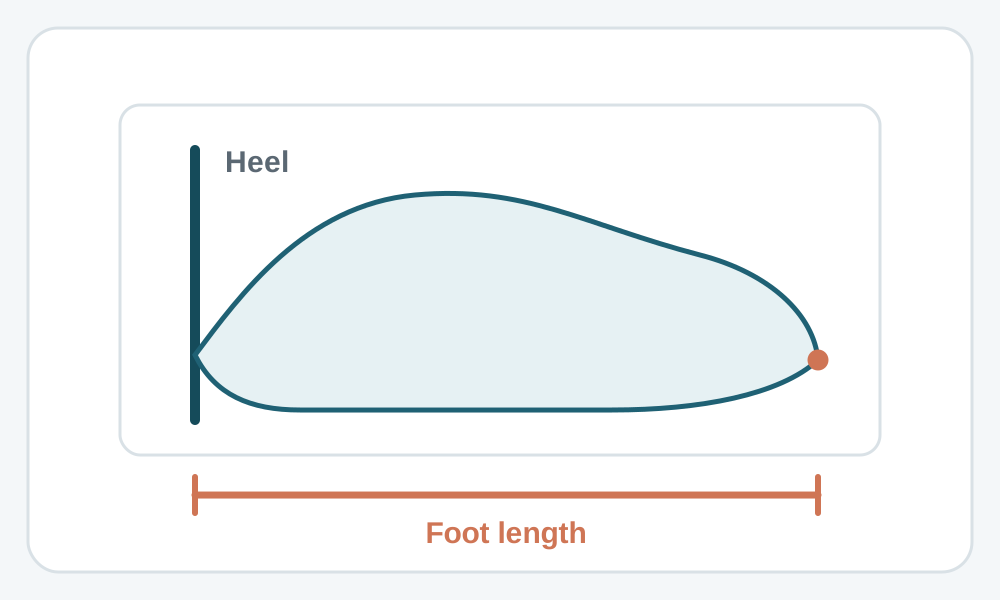
What you need before you start
Use a sheet of paper or a hard floor, a pencil, and a ruler or tape measure. Measure in the socks you expect to wear with the shoes. If you normally use thick athletic socks, measuring barefoot can make the final comparison less useful.
Do not start from an old shoe label. The point of measuring is to create an independent length reference that you can carry between US, UK, EU, and brand-specific charts.
- Measure both feet.
- Measure while standing when possible.
- Record the result before rounding.
- Use the longer foot for size comparisons.
Step-by-step foot measurement
Stand with your heel lightly touching a straight edge. Keep your weight distributed normally so the foot is not shortened by sitting or curling the toes. Mark the end of the longest toe and measure from the heel reference to that mark.
Repeat the process for the other foot. A small left-to-right difference is common, so choose the longer measurement as the safer starting point. If the result is 25.3 cm, keep 25.3 cm rather than immediately rounding it to 25 or 25.5.
How to use the measurement with a size chart
Open the footwear maker’s sizing guide and identify its Foot Length or Heel-to-toe measurement column. Find your measured length there, then read across to the size for the intended model and wearer category. Do not take your measured centimeters to a JP/CM shoe-size label column: a printed CM/JP number can differ from heel-to-toe length.
If your measured length sits between the manufacturer’s foot-length intervals, compare the adjacent product sizes and fit guidance. The shared Sizemapped shoe-label table can help compare printed US/UK/EU/JP labels after you know the maker’s recommendation, but it cannot itself convert a measured foot length to a shoe size.
Common measurement mistakes
The most common errors are measuring only one foot, measuring while seated, using a soft surface, rounding too early, or tracing a foot with the pencil angled outward. Each can move the result enough to change a half-size recommendation.
Another mistake is treating foot length as the same thing as shoe interior length. A shoe must include additional space for movement and construction, so a 25 cm foot does not mean the inside of the shoe should also measure exactly 25 cm.
When the chart and the shoe disagree
Use the brand or manufacturer chart as the final sizing reference when it is available. Generic conversion tables are useful for narrowing the range, but manufacturers use different lasts, width assumptions, and fit allowances.
If two nearby sizes both look reasonable on paper, choose based on the model’s fit notes, width options, return policy, and how you intend to use the shoe rather than forcing the generic conversion to be exact.
How this guidance is checked
These sources support the measurement method and help check real-world variation. They are not presented as one universal brand-size table.
- ISO 19407:2023 — Footwear — Sizing — Conversion of sizing systems — International Organization for Standardization (ISO). Measurement-first footwear methodology and the limitation that cross-system conversions are guidance rather than guaranteed fit.
- Men's Footwear Size Chart — Nike. Manufacturer cross-check showing that foot length, labeled CM values, width, and brand-specific sizing conventions are distinct concepts.
- Footwear Size Guide — adidas. Manufacturer cross-check across heel-to-toe length and US, UK, EU, and Japan-labeled footwear sizes.
Frequently asked questions
Should I measure feet in centimeters or inches?
Either works, but centimeters usually make cross-system comparison easier because many international charts provide metric foot-length references.
What if one foot is longer?
Use the longer foot as the sizing reference, then make sure the shorter foot is still secure through lacing, insoles, or the shoe’s adjustment system.
Should I add extra length before using the chart?
Do not add an arbitrary amount unless the manufacturer tells you to. Measure the foot itself and let the product chart or sizing guidance account for fit allowance.
See something that looks wrong? Report an issue.