Sizing tool
Dress Shirt Size Chart
Start with neck measurement and then confirm chest and sleeve requirements.
| Letter size | Neck range | Chest range |
|---|---|---|
| XS | 13.25–14.25 in / 34–36 cm | 32–36 in / 82–91 cm |
| S | 14.5–15 in / 37–38 cm | 36–38.5 in / 91–98 cm |
| M | 15.25–15.75 in / 39–40 cm | 39–41.5 in / 99–105 cm |
| L | 16–16.5 in / 41–42 cm | 42–45 in / 107–114 cm |
| XL | 17–17.5 in / 43–44.5 cm | 46–48.5 in / 117–123 cm |
| XXL | 18–18.5 in / 46–47 cm | 49–51 in / 124–130 cm |
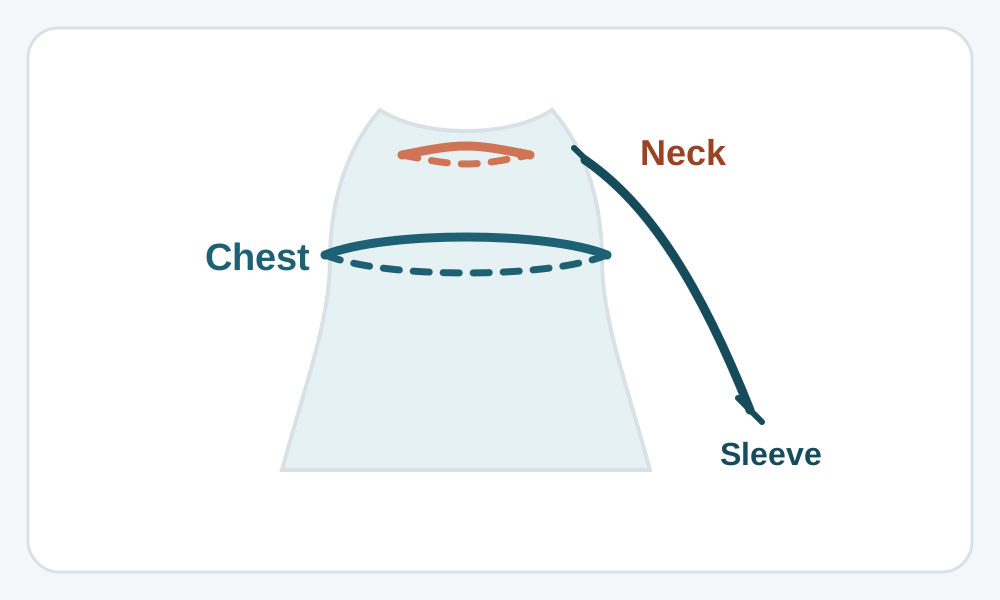
Dress shirts need neck and sleeve checks
Use neck measurement to establish the starting dress-shirt size, then confirm chest, shoulder and sleeve length before choosing the final cut.
Fit names such as slim, regular, relaxed or oversized change ease without creating a universal new size system.
Method & references
How this guidance is checked
These sources support the measurement method and help check real-world variation. They are not presented as one universal brand-size table.
- ISO 8559-2:2025 — Size designation of clothes — Primary and secondary dimension indicators — International Organization for Standardization (ISO). Clothing methodology: size designation should be based on defined body measurements rather than assuming universal retail labels.
- Men Size Guide — H&M. Cross-check for men’s EU/US clothing, chest and waist ranges, trousers, jackets, and suit-style numeric references.
- Sizing Guides — Charles Tyrwhitt. Cross-check for shirt neck, chest, sleeve and fit ranges, showing that fit blocks change garment measurements.
See something that looks wrong? Report an issue.