Should You Size Up or Size Down?
When you are between sizes, the right direction depends on the product rather than a universal rule.
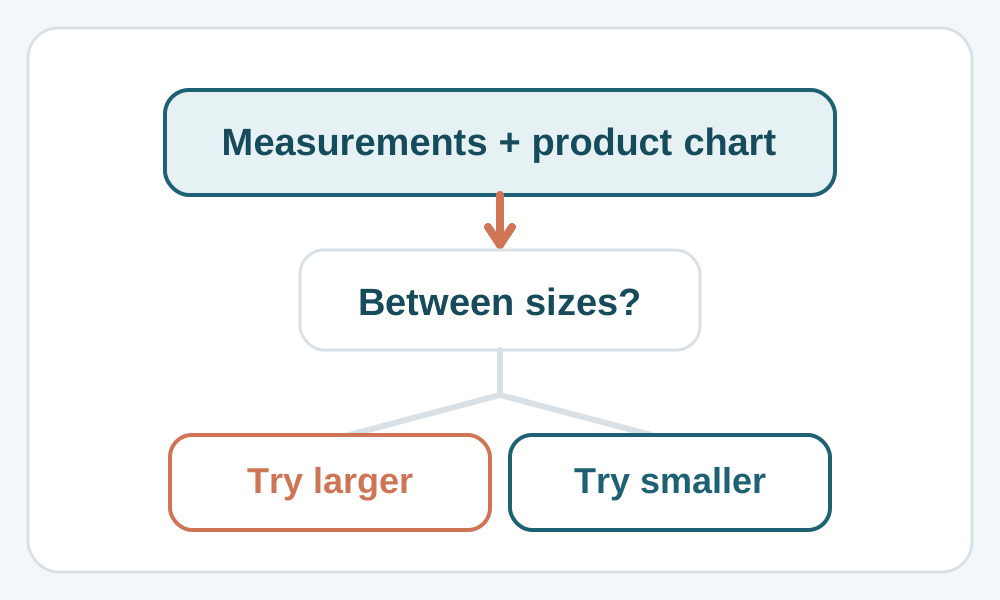
There is no universal rule
“Size up” or “size down” only makes sense after you know why you are between sizes. The right choice depends on the garment or shoe, fabric, intended fit, and which measurement is closest to the boundary.
Use the product chart first, then make the between-size decision from the specific constraint rather than from a general slogan.
Reasons to consider the larger size
The larger size is often safer when the item has little stretch, needs room for layering, must accommodate a critical bust, hip, shoulder, or foot measurement, or is expected to allow growth.
For footwear, do not create “growth room” by jumping several sizes. Excess length can change walking comfort and stability.
Reasons the smaller size may work
The smaller option can make sense when the fabric stretches substantially, the cut is intentionally oversized, the item has useful adjustability, or your measurements sit just below the larger range.
A smaller label should not be chosen simply because you prefer the number. Fit and movement matter more than the tag.
Use return policy and product-specific evidence
When two sizes are genuinely plausible, product reviews that mention fit, the manufacturer’s between-size advice, and the return policy can be more useful than forcing a generic table to decide.
If the item is expensive, difficult to return, or highly fitted, take the extra step of checking the brand’s exact chart and measurement method.
Frequently asked questions
Should I always size up in shoes?
No. Use measured foot length and the manufacturer chart. Too much extra length can be as problematic as too little.
Should stretch clothing be sized down?
Not automatically. Stretch changes tolerance, but the intended silhouette and the chart’s body range still matter.
See something that looks wrong? Report an issue.