How to Measure Bra Size
Two level circumference measurements provide a useful starting point before fit checks.
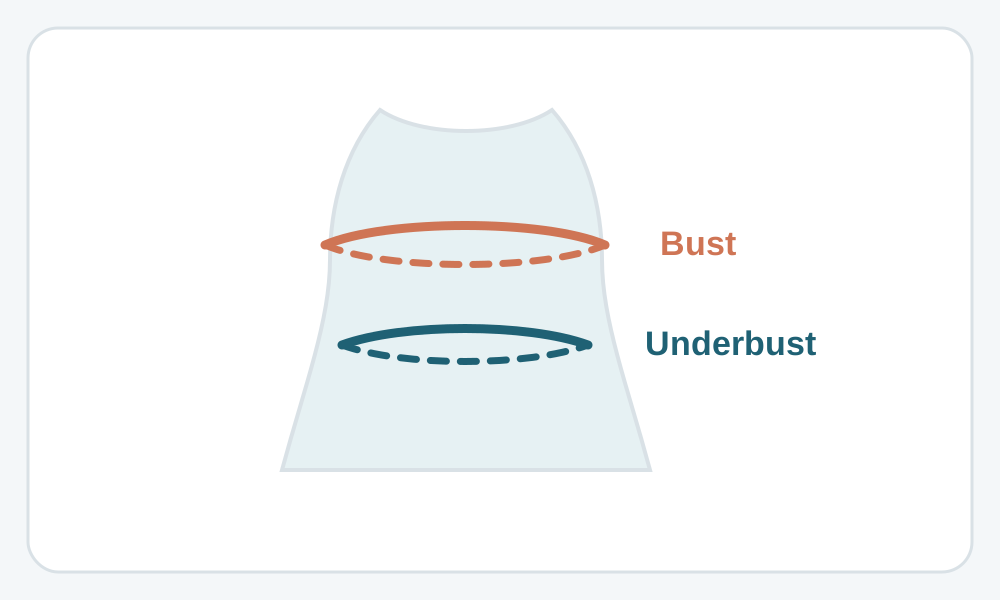
Treat the calculation as a starting size
Bra sizing is more variable than many clothing conversions. The same measurements can produce different starting labels under different brand methods, and cup letters do not have a universal volume independent of band size.
For that reason, use the measurement process to narrow the first sizes to try. The final decision should come from fit: band support, cup containment, wire placement, strap comfort, and whether the bra shape matches the body.
Measure the underbust
Place the tape directly under the bust and keep it level around the torso. The tape should be snug enough to stay in place without painful compression. Record the value before rounding.
The Sizemapped calculator names its source for each result. Knix US looks up published underbust ranges, while Brastop UK uses a whole-inch tape method with odd underbust values rounded to an even band. Do not apply the band rule from one publisher to the cup calculation from another.
Measure the fullest bust
Wrap the tape around the fullest part of the bust while keeping it level across the back. The tape should touch the body without flattening or compressing tissue.
If the measurement changes noticeably with posture or bra style, repeat it and use the most consistent reading. A soft, non-padded bra can make the measurement easier for some people, but comfort and consistency matter more than following one rigid setup.
Read band and cup together
A cup letter on its own is incomplete information because cup volume changes with band size. A 32D and 38D do not represent the same cup volume even though the letter is identical.
For US Knix, compare the fullest-bust value with the actual row in the published Knix band column. If your measurement falls between published anchors, check both reference options and the product fit. For UK Brastop, cup comes from the rounded fullest bust minus the measured whole-inch underbust, not a different band label. These methods do not produce guaranteed US↔UK equivalents.
Check the fit after measuring
The band should provide most of the support without riding up. The cups should contain the breast tissue without major overflow or empty space, and the wire should sit around the tissue rather than on it.
If the cup volume feels close but the band is wrong, a sister size can be a useful experiment. If the wire shape, cup depth, or overall geometry feels wrong, changing only the size may not solve the problem.
How this guidance is checked
These sources support the measurement method and help check real-world variation. They are not presented as one universal brand-size table.
- Bra Fit Calculator — Wacoal. Bra measurement cross-check using underbust and fullest-bust measurements and brand-specific fitting logic.
- Traditional Bra Size Guide — Underbust Bands and Full-Bust Anchors — Knix. Source-specific US bra fit reference: 11 published underbust intervals and 99 full-bust cup anchor cells; no inferred gaps.
- How to Measure Your Bra Size at Home — Brastop. UK whole-inch underbust band rounding and 1–15-inch measured bust-minus-underbust cup sequence A–K.
Frequently asked questions
Why does my measured size differ from the size I already wear?
Your current bra may use a different brand method, may have stretched over time, or may fit differently because of cup shape and construction. Use the measured size as a comparison point, not an automatic replacement.
Can I convert only the cup letter between countries?
No. Convert the full size because cup volume depends on band size and letter sequences differ between systems.
See something that looks wrong? Report an issue.